If you're a history, culture, and religion enthusiast, you shouldn't miss the opportunity to visit Quan Thanh Temple when in Hanoi. Join BDATrip in exploring this mysteriously revered "Thang Long guardian" temple!
If you're a history, culture, and religion enthusiast, you shouldn't miss the opportunity to visit Quan Thanh Temple when in Hanoi. Join BDATrip in exploring this mysteriously revered "Thang Long guardian" temple!
Quan Thanh Temple, also known as Tran Vu Quan, is an ancient temple built during the era of Ly Nam De (544-602), dedicated to Tran Vu, a Taoist deity famed for his power to repel evil spirits and protect the borders. Located in the northwest of Hanoi, near West Lake on Thanh Nien Street, this temple is one of the four sacred temples holding significant positions in the spiritual landscape of Thang Long, alongside Bach Ma Temple, Voi Phuc Temple, and Ly Bach Temple.
These temples are considered the "four guardians of Hanoi," each representing one of the four mythical creatures: Temple symbolizes the dragon, Bach Ma Temple the horse, Voi Phuc Temple the elephant, and Ly Bach Temple the tiger. This site also hosts numerous traditional festivals of Hanoi, including the Quan Thanh Temple Festival on the 15th day of the third lunar month, the Dragon Boat Racing Festival on West Lake on the 5th day of the fifth lunar month, and the Lantern Festival on the 15th day of the eighth lunar month.
According to legend, Tran Vu, a Taoist deity, is renowned for his ability to control evil spirits and protect borders. In the Three Kingdoms era, he was a valiant general of the Wei state, marked by his victories against the forces of Cao Cao and Liu Bei. After his death, Tran Vu was deified as the protector of Northern China. When the Ly dynasty established their capital at Thang Long, they brought with them the worship of Tran Vu and built Quan Thanh Temple in his honor. Another tale tells of Tran Vu as a dragon deity with the power to control the weather, bringing peace to humanity. Once, appearing on West Lake, Tran Vu met Ngoc Hoa, a stunning young woman, and the two fell deeply in love, starting a beautiful love story. They bore a son, Quy Minh, who possessed extraordinary abilities and was later honored by the Ly court. However, unable to endure the jealousy of other officials, Quy Minh was assassinated. Grieving their loss, Tran Vu and Ngoc Hoa decided to leave the mortal world. Before ascending to heaven, they left behind their bronze statues at the temple as a reminder of their eternal love for each other and humanity.
With a rich history spanning over 1400 years, Quan Thanh Temple has witnessed and contributed to the country's chronicles. Noteworthy highlights in the temple's development include:
- In 1010, when Emperor Ly Thai To decided to move the capital from Hoa Lu to Thang Long, he renamed the temple to Tran Vu Quan, in honor of the deity Tran Vu, protector of the new capital.
- By 1070, Emperor Ly Thanh Tong initiated the construction of the Temple of Literature - Quoc Tu Giam and placed a stele recording the names of those who excelled in the national examinations at the temple. Known as the Tran Vu Doctor Stele, it is the oldest surviving stele in Vietnam.
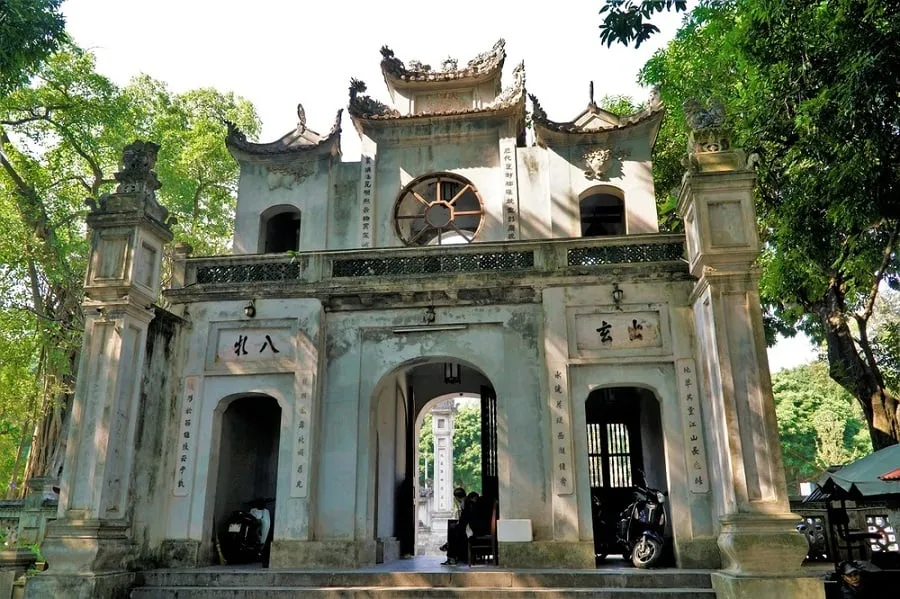
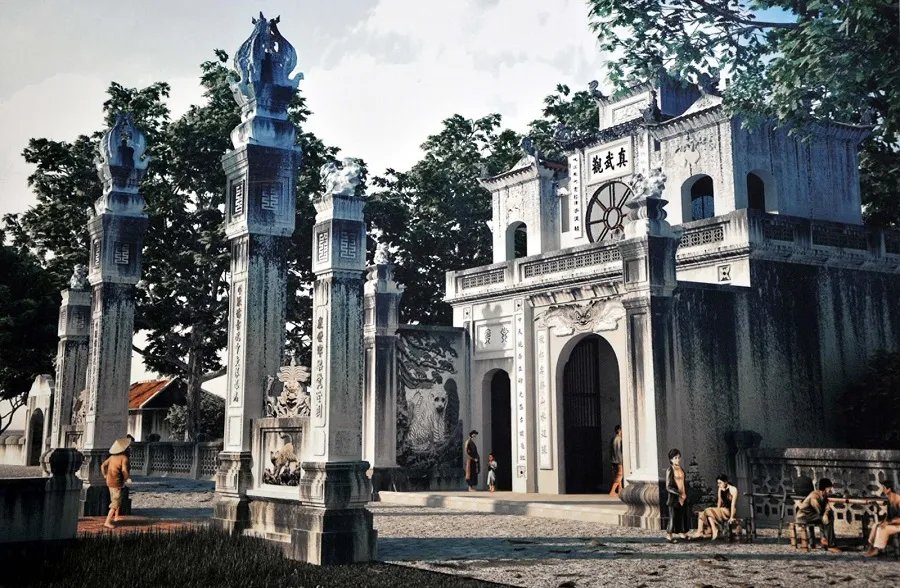
- In 1136, under Emperor Ly Than Tong, the three-tiered Tam Quan gate of the temple was built, featuring unique architecture and intricate patterns.
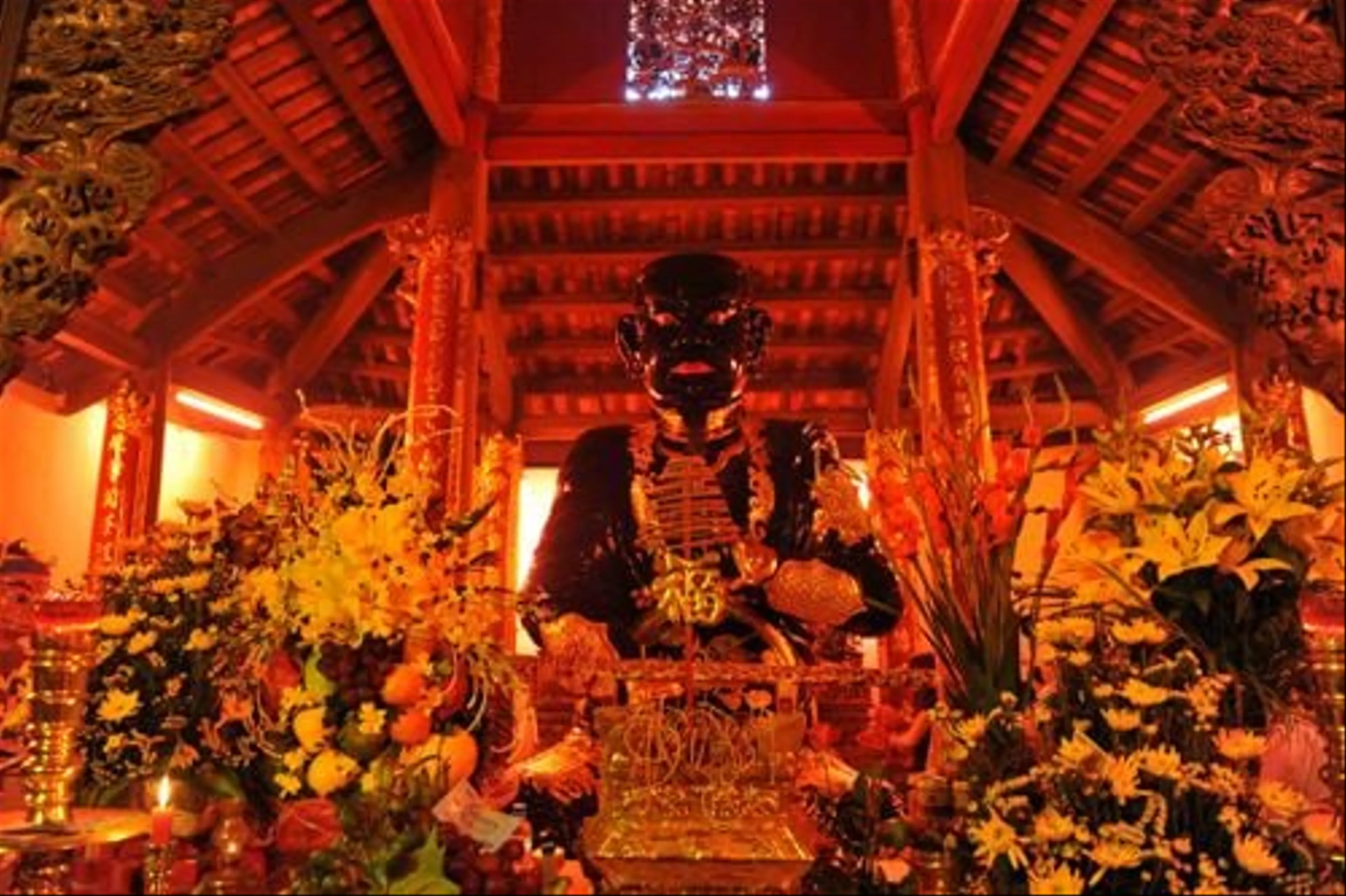
- In 1677, Emperor Le Huyen Ton crafted the bronze statue of Tran Vu, standing 3.96 meters tall and weighing 4 tons, placed at the temple's center. The statue is described as a masterpiece of Vietnamese bronze artistry, characterized by its majestic appearance, muscular physique, and glittering armor.
- During the resistance against the French in 1893, temple became a secret meeting place for notable patriots such as Phan Dinh Phung, Hoang Hoa Tham, and De Tham.
- In 1945, during the August Revolution, the temple served as a venue for protests supporting the Viet Minh and the proclamation of independence by Ho Chi Minh before marching to Ba Dinh Square.
- In 2010, the temple was recognized as a special national historical monument, carefully preserved and restored to maintain its beauty and historical value.
Quan Thanh Temple welcomes visitors from 8 am to 5 pm daily, except during public holidays. Admission is 10,000 VND for adults and 5,000 VND for children. Tickets can be purchased at the ticket booth at the entrance. For convenience, visitors can also buy tickets online through reputable travel websites such as Klook, Traveloka, or Tripadvisor, saving both time and cost.
To reach Quan Thanh Temple, visitors have a variety of transportation options depending on their starting location and personal preferences. Here are some suggestions:
- Bus: A convenient choice with routes 31, 41, 55, or 58 dropping you near the temple, just about 200 meters away. The fare per trip is 7,000 VND.
- Motorbike: Follow Thanh Nien Road and turn onto Quan Thanh Street. There's parking available for motorbikes near the temple for a fee of 5,000 VND.
- Bicycle: Similar to motorbikes, you can ride along Thanh Nien Road, turn onto Quan Thanh Street, and park your bicycle at the designated area for 2,000 VND.
- Taxi: Opt for reputable companies like Mai Linh, Taxi Group, or Grab. Fares vary depending on the company and distance, typically ranging from 10,000 VND to 20,000 VND per kilometer.
- Electric Car: An eco-friendly option, stopping near the temple about 300 meters away. The fare per ride is 30,000 VND.
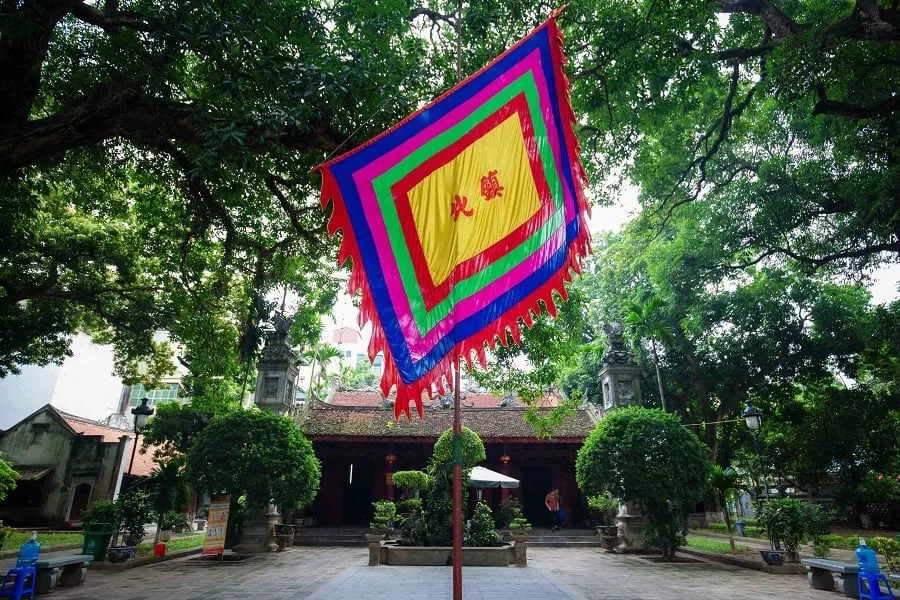
Quan Thanh Temple's architecture brilliantly reflects the blend of solemnity and grace inherent in Taoist design, consisting of three main gates: Tam Quan, the Middle Gate, and the Rear Gate. The Tam Quan, or main gate, impresses with its bright red tiles, green wooden columns, and exquisite carvings. The Middle Gate, leading to the central area, features golden roof tiles, red columns, and a stone stele bearing the temple's name.
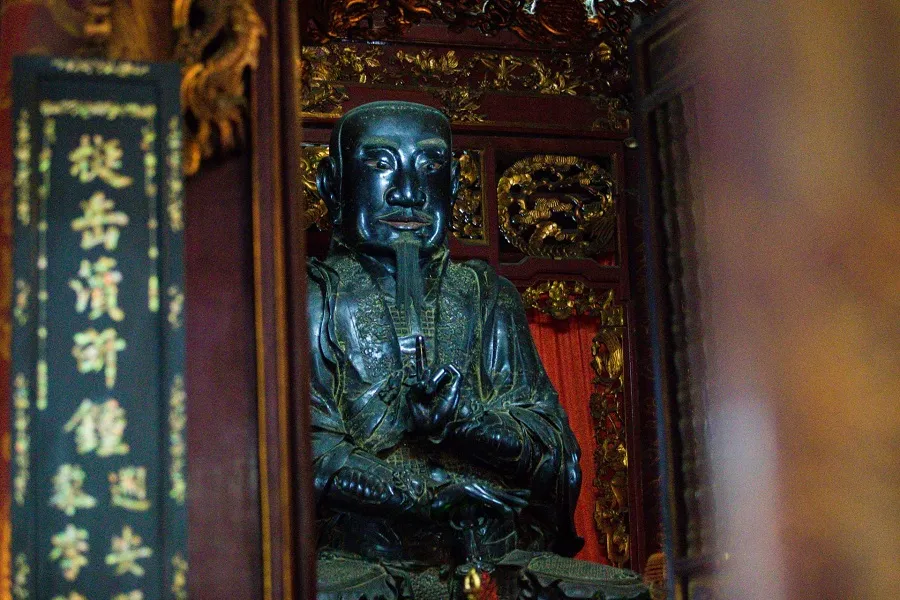
The Rear Gate opens to the back, with green tiles, white columns, and a historical stone stele. The Main Hall, dedicated to the deity Tran Vu, boasts red tiles, green columns, and a raised wooden floor. A bronze statue of Tran Vu, standing 3.96 meters tall and weighing 4 tons, sits solemnly on a stone pedestal, exuding an aura of power and majesty, adorned in shimmering armor. Accompanying Tran Vu are two other bronze statues, the White Tiger and Xa Lan, his loyal guardians. The Main Hall also houses valuable worship artifacts like bronze lamps, incense burners, altars, and flower vases. It features the Tran Vu Doctor Stele, the oldest stele in Vietnam, recording the names of scholars from 1070 to 1779, symbolizing the wisdom and eternity of Vietnamese culture.
At Quan Thanh Temple, visitors can engage in a range of unique and enriching experiences, including:
- Exploring Architecture and Art: Immerse yourself in the temple's architectural beauty and artistry, from the Tam Quan Gate to the Main Hall. Admire the intricate decorative patterns, marvel at the bronze statues, and deepen your understanding of their historical and spiritual significance.
- Participating in Worship and Prayer: Perform worship rituals and pray for blessings and protection from the deity Tran Vu. Purchase incense, flowers, and fruits at nearby stalls to offer at the altar, or engage in activities like fortune-telling for a sense of peace and fortune.
- Discovering Local Cuisine: Sample the distinctive flavors of Hanoi's cuisine at nearby eateries, from bun cha and pho to banh cuon and che. Relax in local tea shops and cafes, enjoying traditional music like quan ho, ca tru, in a serene setting.
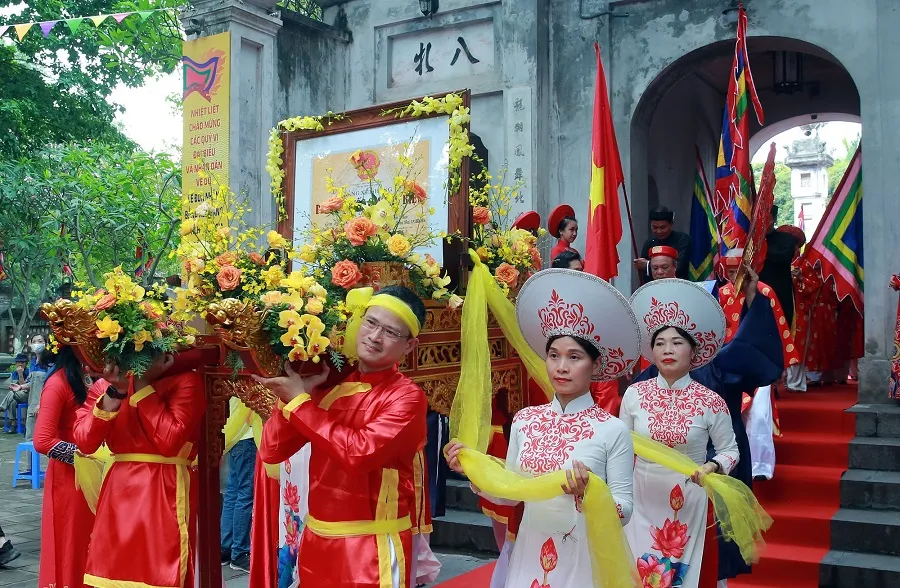
- Joining Traditional Festivals: Experience the vibrant atmosphere of traditional festivals at the temple, such as the spring festival on the 15th day of the third lunar month, dragon boat racing, and lantern festivals. These events offer a chance to explore the culture, arts, and folk games of Hanoi's residents.
The area surrounding Quan Thanh Temple also hosts several other fascinating attractions for visitors, including:
- West Lake: Enjoy the serene beauty of the clear blue waters, lush greenery, and attractive architectural structures around the lake. Visitors can rent paddle boats, sailboats, or kayaks to explore West Lake from the water, offering a peaceful and close-to-nature experience.
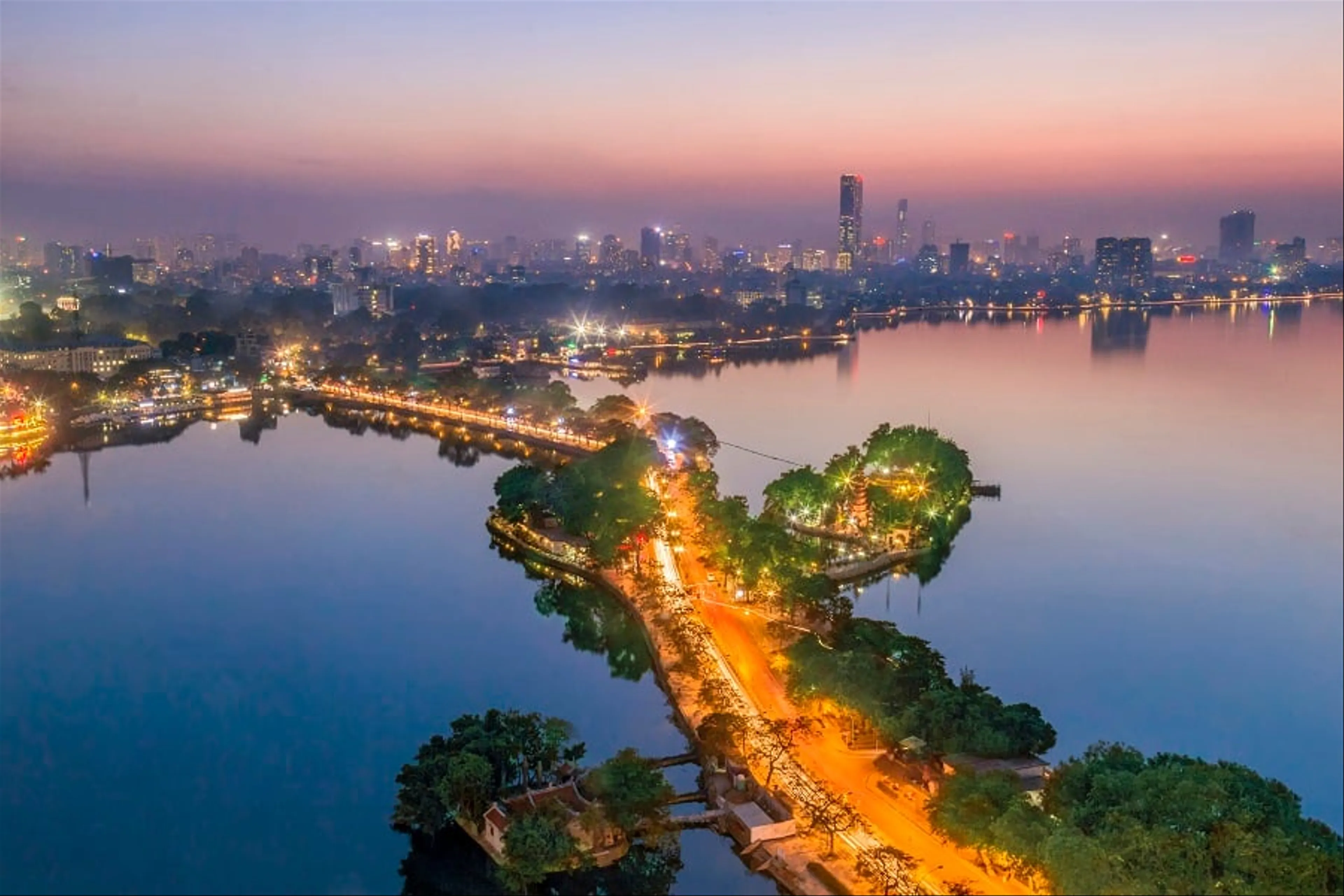
- Tran Quoc Pagoda: Visit this ancient and revered pagoda in Hanoi, located on a small peninsula of West Lake, just about 1 km from the temple. Explore Buddhist architecture and art at the pagoda, including the Main Shrine, Ancestor Hall, and Bao Thap (Precious Tower), and participate in worship rituals for peace and purification.
- Vietnam Women's Museum: Experience the richness of culture and history through this unique museum on Ly Thuong Kiet Street, approximately 2 km from the temple. The museum provides an in-depth look into the roles and lives of Vietnamese women through diverse exhibitions, documents, and artifacts. Visitors also have the opportunity to shop for handicraft products, souvenirs, or books about Vietnamese women at the museum store.
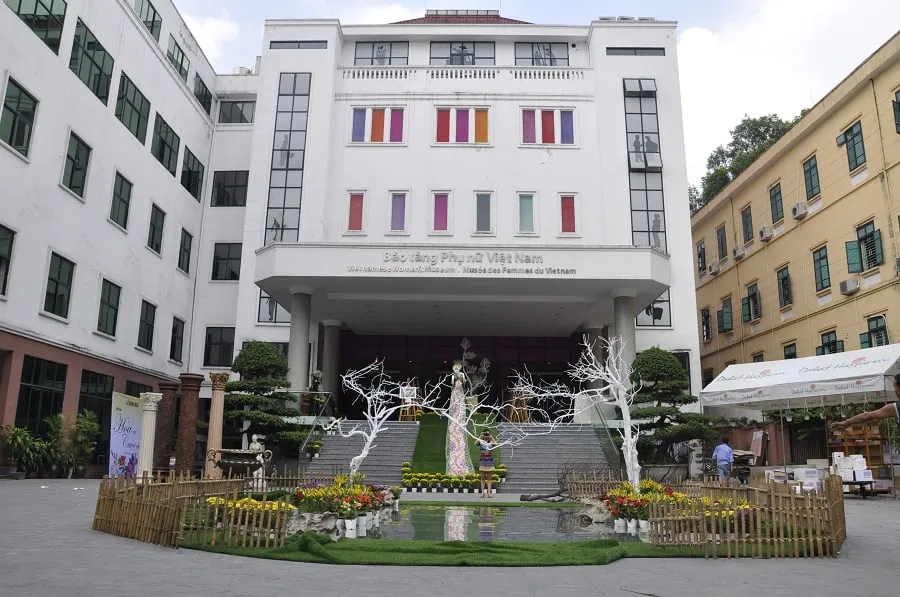
To ensure the best cultural tourism experience when visiting Quan Thanh Temple, please remember the following guidelines:
- Appropriate Dress: Wearing modest and appropriate attire is a sign of respect for local beliefs and traditions. Visitors should remove their shoes before entering the worship area, leaving them at the entrance.
- Adherence to Rituals: Follow the temple's regulations and rituals, including not touching worship items, refraining from taking photos or recording videos in sacred areas, maintaining order and respecting the quiet space, and avoiding inappropriate questions or comments about the local religion.
- Local Cuisine: Prefer dining at clean, licensed eateries. Carefully check the production date and expiry of food items, avoiding consumption of wild animal products.
- Participation in Festivals: Immerse yourself in the joyful and communal atmosphere with the local people while maintaining personal safety. Limit carrying valuable items and maintain public cleanliness, avoiding littering in the temple area or during festivals.
Quan Thanh Temple is one of the four sacred temples guarding Thang Long and has become a spiritual cultural symbol of the Kinh Ky region. Visit this sacred temple to feel the ancient and sacred atmosphere of a guardian of Thang Long.
Attractive tourist destinations in Hanoi:
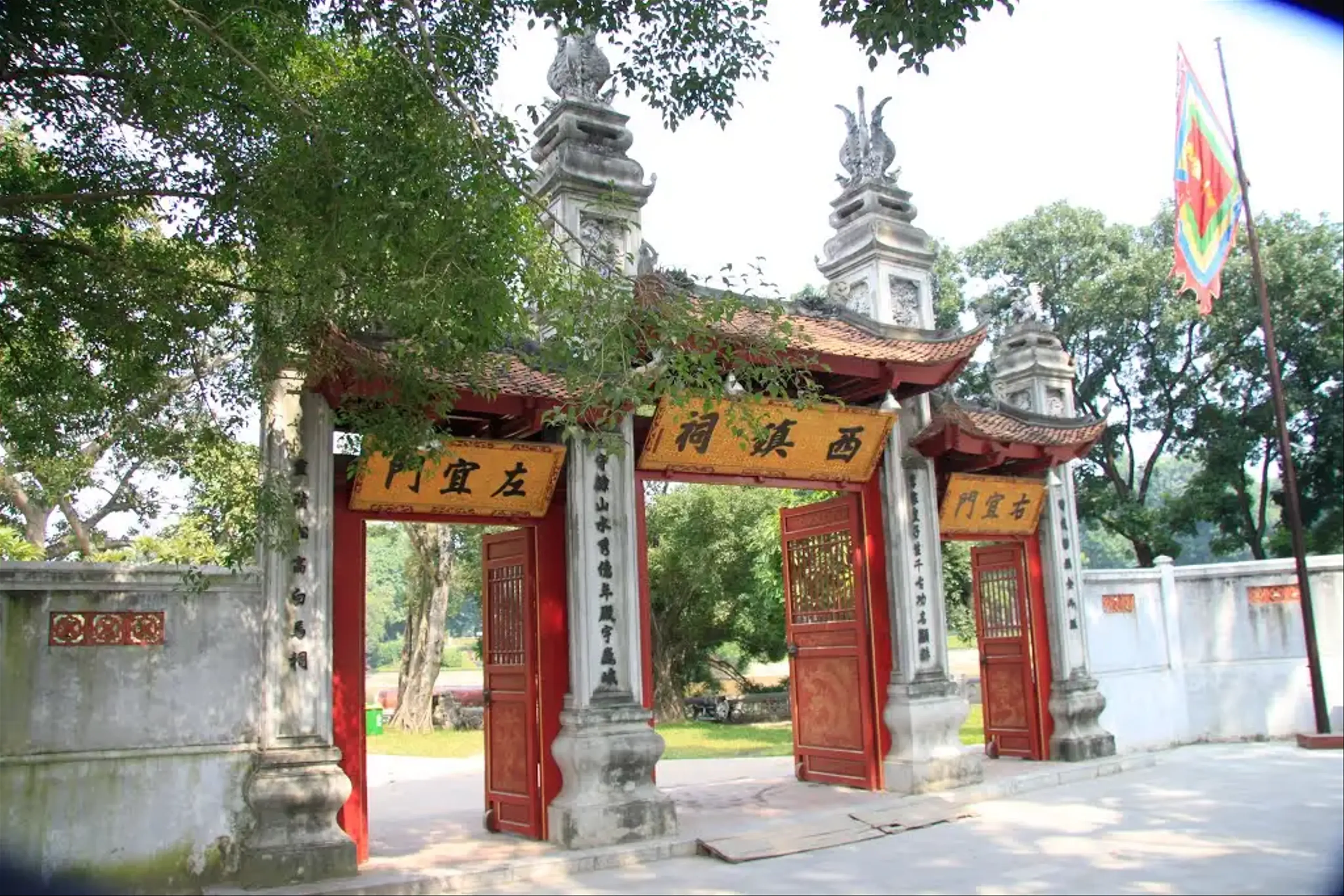
Voi Phuc Temple is a profound cultural and spiritual symbol for the people of Hanoi, preserving traditional values over centuries. With its ancient architecture and tranquil atmosphere, the temple has become an ideal stop for visitors who want to explore history and enjoy peace amidst the bustling capital. Let BDATrip take you on a journey to discover one of the most captivating spiritual destinations!
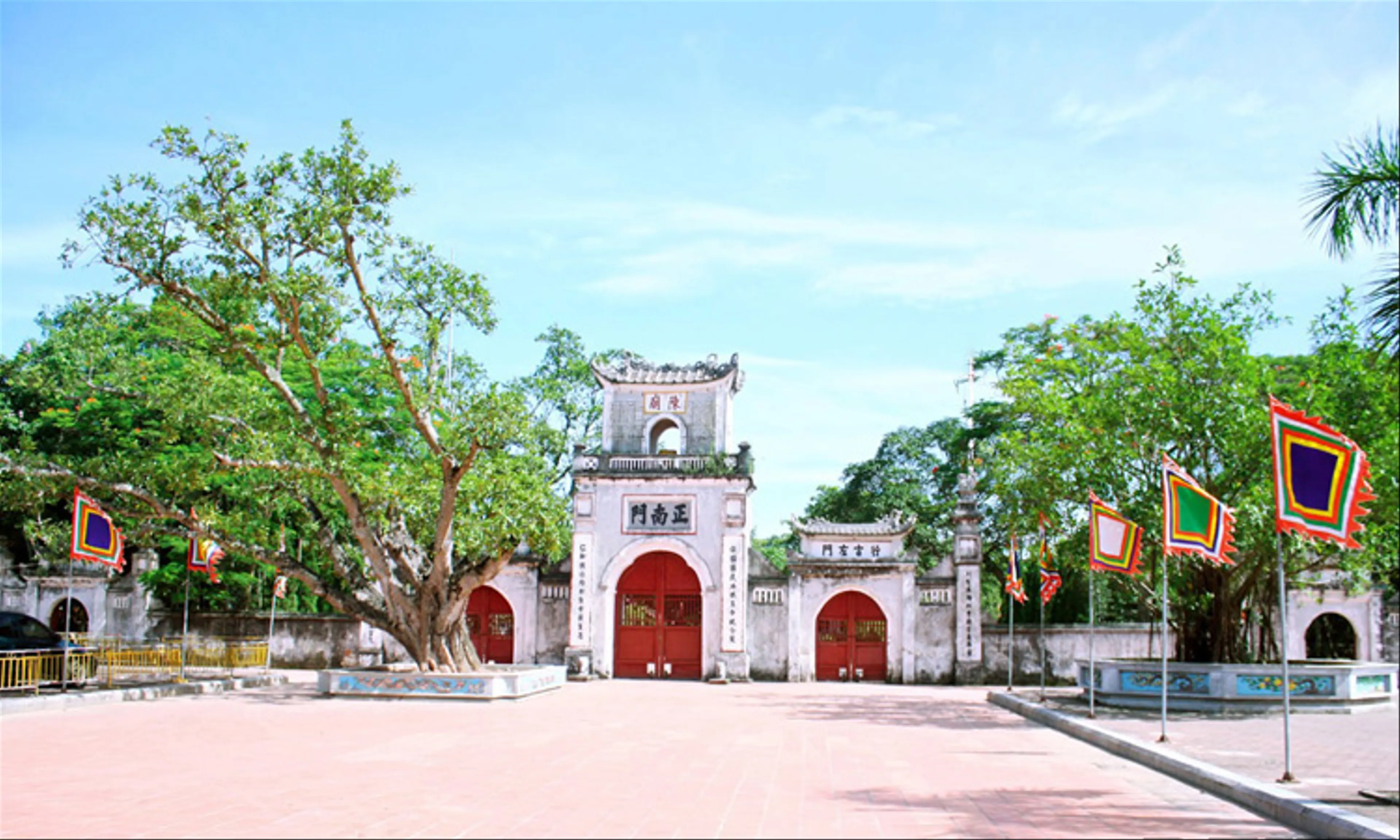
Nestled in the heart of Nam Dinh province, Vietnam, the Tran Temple stands as a testament to the rich cultural heritage of the region. This ancient temple, with its captivating history and architectural marvels, attracts both locals and tourists alike. Let's embark on a virtual journey to explore the charm and significance of the Tran Temple in Nam Dinh.
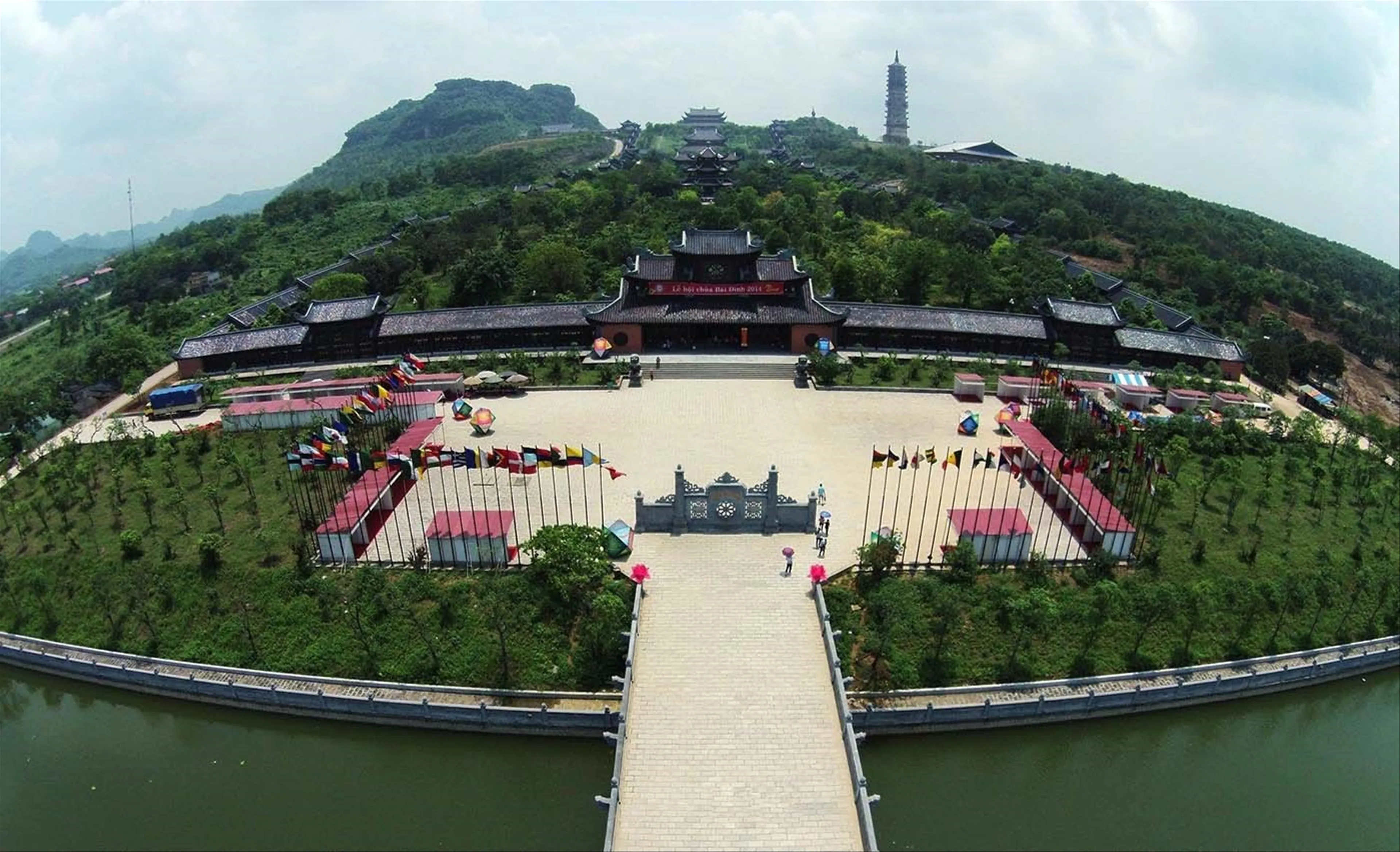
Hoa Lu, the ancient capital of Ninh Binh, is renowned for its cultural and historical monuments. Join BDATrip as we explore essential travel experiences for your first visit!