Best Price Guarantee
We'll match any price
Flexible Booking
Need changes? We'll help adjust it
Quick Confirmation
Usually confirmed within 24 hours
Dedicated Support
We're here to help along the way
BDATrip invites you on an 8 day, 7 night journey to explore the greatest cultural heritages and most unique natural landscapes of Northwest China. From the ancient capital of Xi'an, the starting point of the legendary Silk Road with its majestic Terracotta Army, to the mysterious desert oasis of Dunhuang. Later, you will marvel at the colorful geological masterpieces of Danxia Geopark, the vast beauty of Qinghai Lake, and the magical Chaka Salt Lake. This trip will not only transport you to a golden past but also unveil surreal natural sceneries, promising unforgettable experiences.
Xi'an, one of China's Four Great Ancient Capitals, is the perfect starting point for this exploration. It served as the capital for 13 dynasties, witnessing the ebb and flow of history and standing as a cradle of Chinese civilization. With its monumental architecture and timeless historical narratives, Xi'an possesses an irresistible allure for travelers.

No visit to Xi'an is complete without mentioning the Mausoleum of Qin Shi Huang and the Terracotta Army, one of the greatest archaeological discoveries of the 20th century. This complex of life-sized terracotta warriors and horses was interred near the tomb of Emperor Qin Shi Huang, the first emperor to unify China. The construction of the mausoleum spanned 38 years and involved 700,000 laborers, a testament to Qin Shi Huang's power and ambition. Over 8,000 statues of infantry soldiers, civil officials, military officers, and warhorses, each with a unique facial expression and posture, were meticulously arranged to protect the emperor in the afterlife. It's a truly awe-inspiring sight that leaves every visitor mesmerized by the craftsmanship and scale of ancient Chinese civilization.

Following the vestiges of the Qin Dynasty, Xi'an also boasts the glorious legacy of the Tang Dynasty, one of the most prosperous periods in Chinese history. The Giant Wild Goose Pagoda, an ancient Buddhist temple completed in 652 during the reign of Emperor Gaozong, is a symbol of Xi'an and the place where Master Xuanzang stored Buddhist scriptures brought back from India. The pagoda holds deep spiritual significance and stands as a testament to the flourishing development of Buddhism during the Tang era.
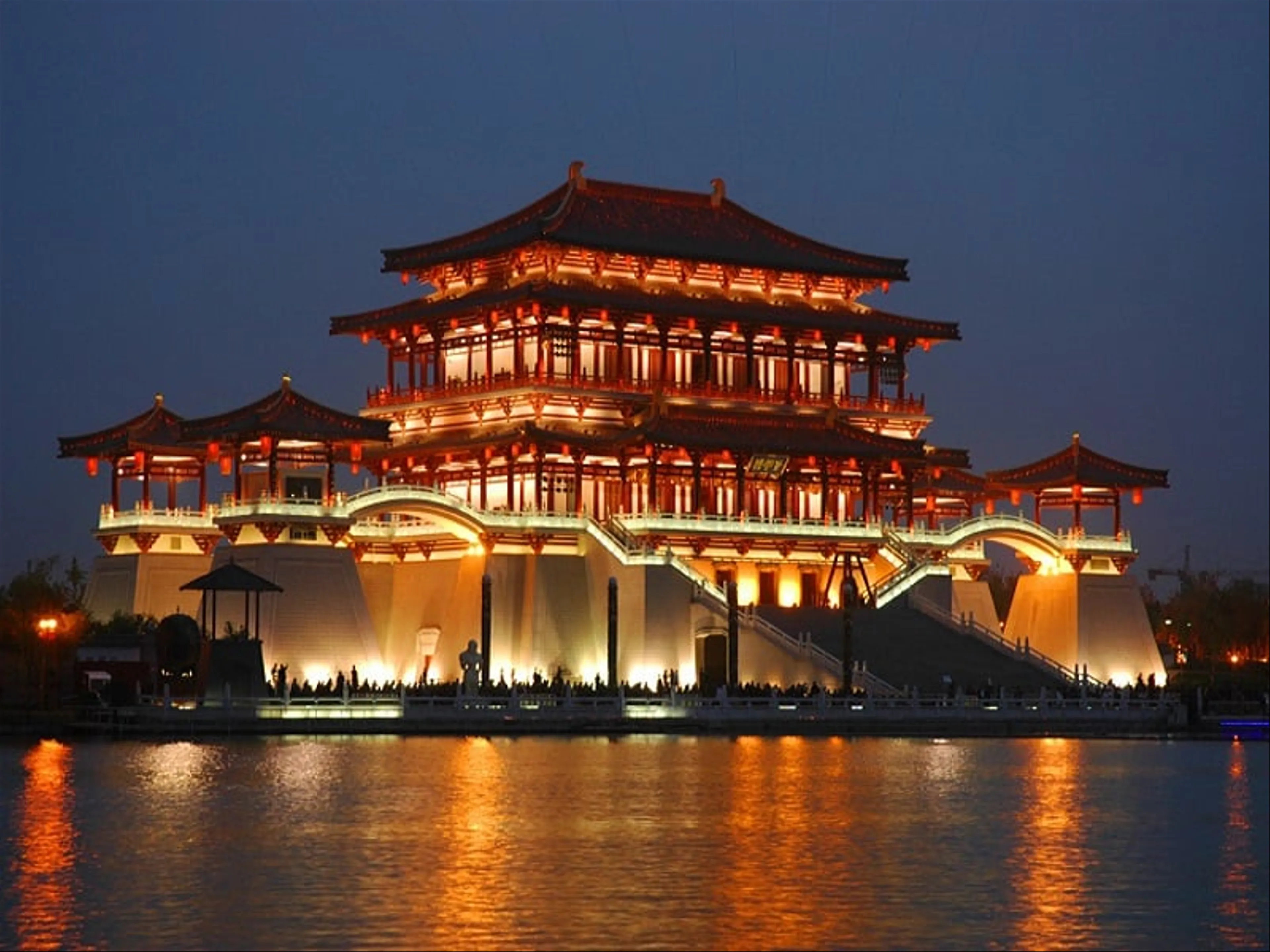
In the evening, the Grand Tang Everbright City will transport you back to the opulent and dazzling atmosphere of ancient Chang'an. This large pedestrian street is modeled after Tang Dynasty architecture and culture, illuminated by shimmering lights, traditional art performances, and colorful festivals. You'll have the opportunity to immerse yourself in a unique cultural ambiance, savor local cuisine, and witness a modern Xi'an that beautifully preserves its ancient charm.

Leaving Xi'an, our journey takes you to Dunhuang, a legendary oasis in the heart of the Gobi Desert, once a crucial stop on the Silk Road. This place bears witness to the cultural and religious convergence between East and West.
Mingsha Mountain, or the 'Singing Sands Mountain', is a unique natural phenomenon. The golden sands here, when blown by the wind, produce peculiar sounds akin to string instruments, flutes, or even drums, offering an unforgettable auditory experience. Amidst Mingsha Mountain lies Crescent Lake (Yueyaquan), a crystal-clear freshwater spring shaped like a crescent moon, miraculously existing for thousands of years in the arid desert. This lake is not just a lush oasis but also a symbol of life and captivating beauty amidst vast sand dunes.
The highlight of Dunhuang is undoubtedly the Mogao Grottoes, also known as the Caves of a Thousand Buddhas, a UNESCO World Heritage site. This complex of cave temples houses thousands of murals and Buddhist statues dating back over 1,500 years, making it the largest collection of Buddhist art in the world. The artworks here not only reflect the development of Buddhism but also serve as a testament to the rich cultural exchange along the Silk Road. Additionally, the 'Child of the Earth' sculpture, a giant sleeping baby in the Gobi Desert, conveys a profound message about the embrace of heaven and earth around human life, evoking a special emotion in visitors.

The journey continues, leading you to the spectacular natural wonders of the Northwest region, where Mother Nature has sculpted surreal landscapes.
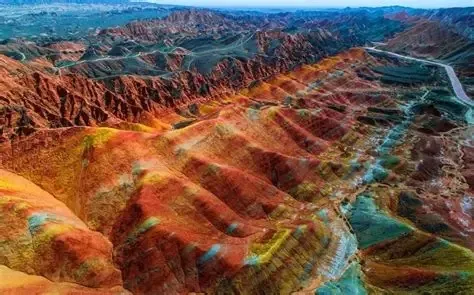
Zhangye Danxia Geopark is famous for its multi-colored mountains, often called 'Rainbow Mountains'. Covering an area of 510 square kilometers, it's a colossal natural painting with vibrant stripes of red, yellow, orange, green, and white, formed over millions of years of geological processes. This magnificent landscape feels like stepping into a fairy tale, making it one of China's most beautiful geomorphological areas and an unmissable destination for photography enthusiasts and those seeking to admire unique natural beauty.
The Jinta Poplar Forest is an ancient forest featuring hundreds, even thousands, of years old poplar trees. These trees are renowned for their incredible resilience, capable of surviving in the harsh desert climate. In autumn, the poplar forest transforms into a dazzling array of golden hues, creating a poetic and impressive scenery. The seasonal change in the shape of poplar leaves also adds to the diverse beauty of the forest.
Qinghai Lake, China's largest saltwater lake, situated on the Qinghai-Tibet Plateau, boasts majestic and serene beauty. With an area comparable to several small countries, this azure lake is a precious gem amidst the vast plateau, where mountains, grasslands, and the expansive lake surface merge harmoniously.
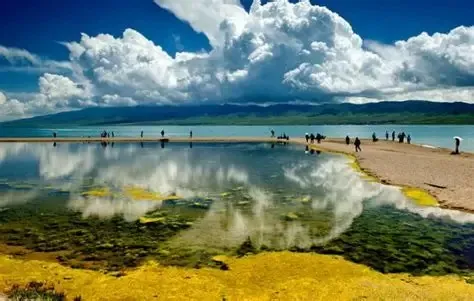
Equally impressive is Chaka Salt Lake, dubbed the 'Mirror of the Sky in China'. Standing on the lake's surface, visitors will see reflections of the blue sky and white clouds, like a living work of art. Chaka Lake also features unique dry salt sculptures and offers a small train ride around the lake, creating unforgettable photo opportunities.
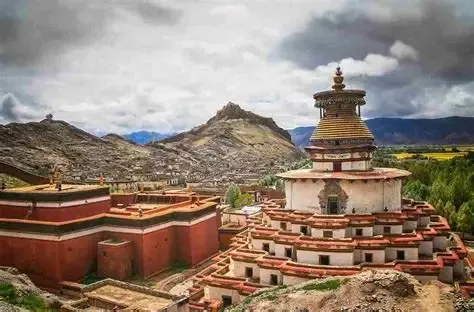
Finally, Kumbum Monastery (Ta'er Monastery) in Xining is one of the six largest monasteries of the Gelugpa school of Tibetan Buddhism. This monastery is an important religious center with distinctive architecture, magnificent stupas, and shrines, along with hundreds of monks studying there. Here, you will feel the profound spiritual atmosphere and learn about the rich Tibetan Buddhist culture, concluding a journey filled with unique cultural and natural experiences.
Let BDATrip accompany you on this fascinating adventure, exploring the best of Northwest China!
$1/pax
8 days
Efficient and Engaging
“From the Hue Citadel to the Perfume River, every stop was well-organized. The guide’s humor kept the group entertained, and the air-conditioned van made long drives pleasant. A great value for the itinerary.”
James
Australia · June 22, 2026
Sacred Sites in Hue
“The Imperial City and Thien Mu Pagoda were serene. The guide’s deep understanding of Vietnamese history made the temples feel alive, and the motorbike ride was surprisingly comfortable.”
Sophie Dubois
France · May 15, 2026
Adventure in Ninh Binh
“The kayak through the rice paddies and limestone cliffs was peaceful. Our guide, Linh, picked the perfect spots for photos, and the local lunch was bursting with flavor.”
Yuki Sato
Japan · May 16, 2026
Da Nang's Coastal Beauty
“Van's knowledge of local history enriched our bike tour. The beach stops were refreshing, and the group stayed cohesive despite the heat. A great way to see the coast.”
Tendai Moyo
South Africa · May 19, 2026
Hoi An's Hidden Gems
“Anh showed us family-run workshops and secret night markets. The small group size made it easy to ask questions. We left with a deeper connection to the town's heritage.”
Emily Carter
Canada · May 14, 2026
Scenic Beauty and Warm Hospitality
“The tour to Nha Trang included a thrilling boat ride to a nearby island. Our guide Linh arranged a home-cooked meal with a local family, which was a highlight. The transport was comfortable, though some stops felt brief.”
Sophie
France · July 11, 2026