Can Cau Market is one of the most vibrant and unique highland markets in Lao Cai Province. Located about 18 kilometers north of Si Ma Cai Town, the market belongs to Can Cau Commune, Si Ma Cai District, right near the Vietnam-China border. Held every Saturday morning, Can Cau Market is a cultural rendezvous for ethnic minorities living in the northern mountainous regions.
Can Cau Market is one of the most vibrant and unique highland markets in Lao Cai Province. Located about 18 kilometers north of Si Ma Cai Town, the market belongs to Can Cau Commune, Si Ma Cai District, right near the Vietnam-China border. Held every Saturday morning, Can Cau Market is a cultural rendezvous for ethnic minorities living in the northern mountainous regions.
What makes Can Cau Market truly special is its large-scale buffalo trading area, famously known as the biggest buffalo market in Vietnam’s Northwest. Besides, it is a bustling hub for exchanging agricultural products, goods, and a vivid showcase of the cultural life and traditions of the Hmong, Giay, and Dao people. Let's learn about Can Cau market with Bdatrip.
Can Cau Market has existed for hundreds of years, originating from the need of local ethnic communities to trade and exchange goods. In the past, it was merely a simple gathering spot for villages to barter farm produce, livestock, and handmade brocades. Over time, the market flourished, with the buffalo trading zone growing especially prominent.
More than just a trading site, Can Cau Market has become a unique cultural symbol of the highland people a place that connects ethnic groups and preserves traditional values through generations.
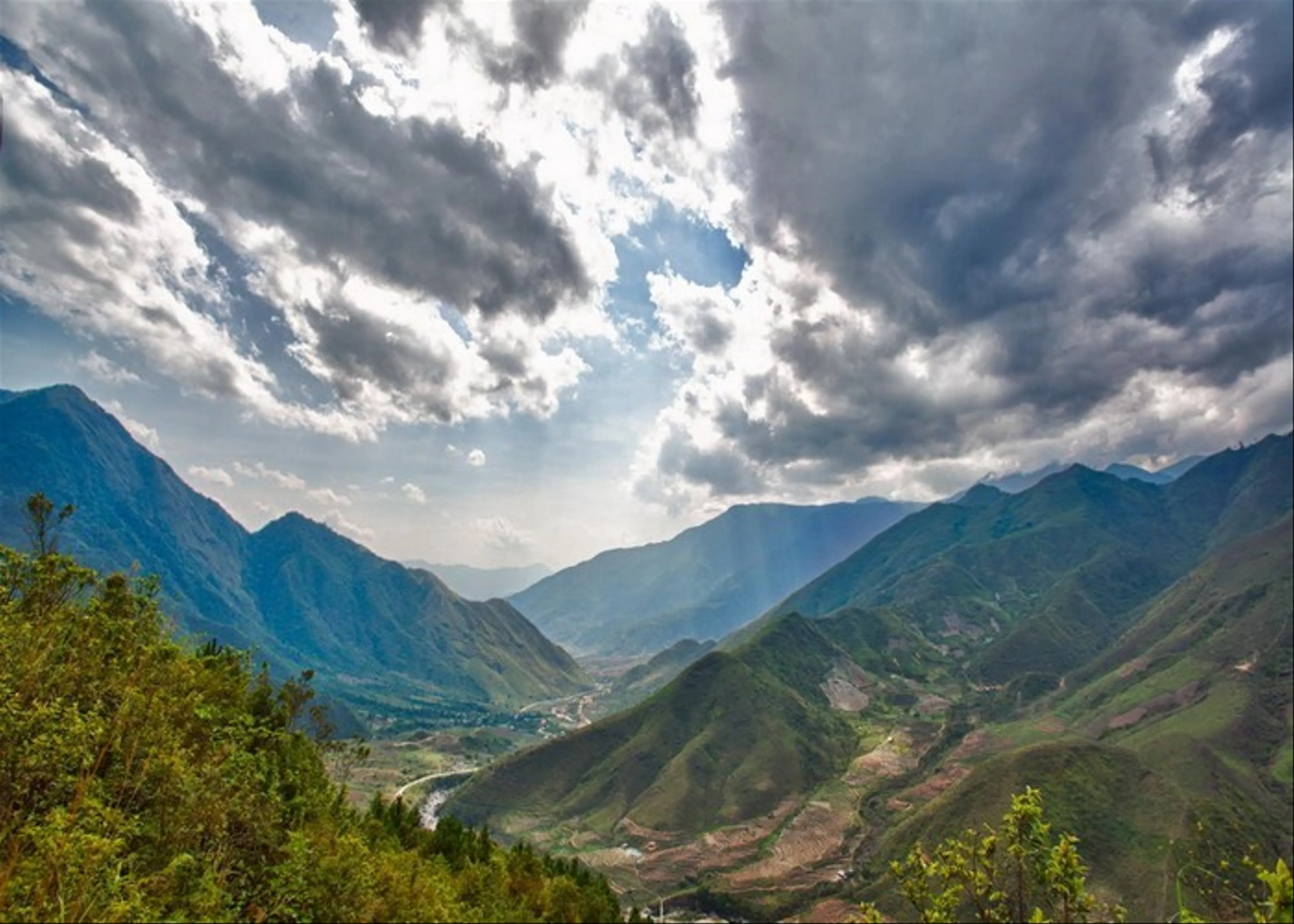
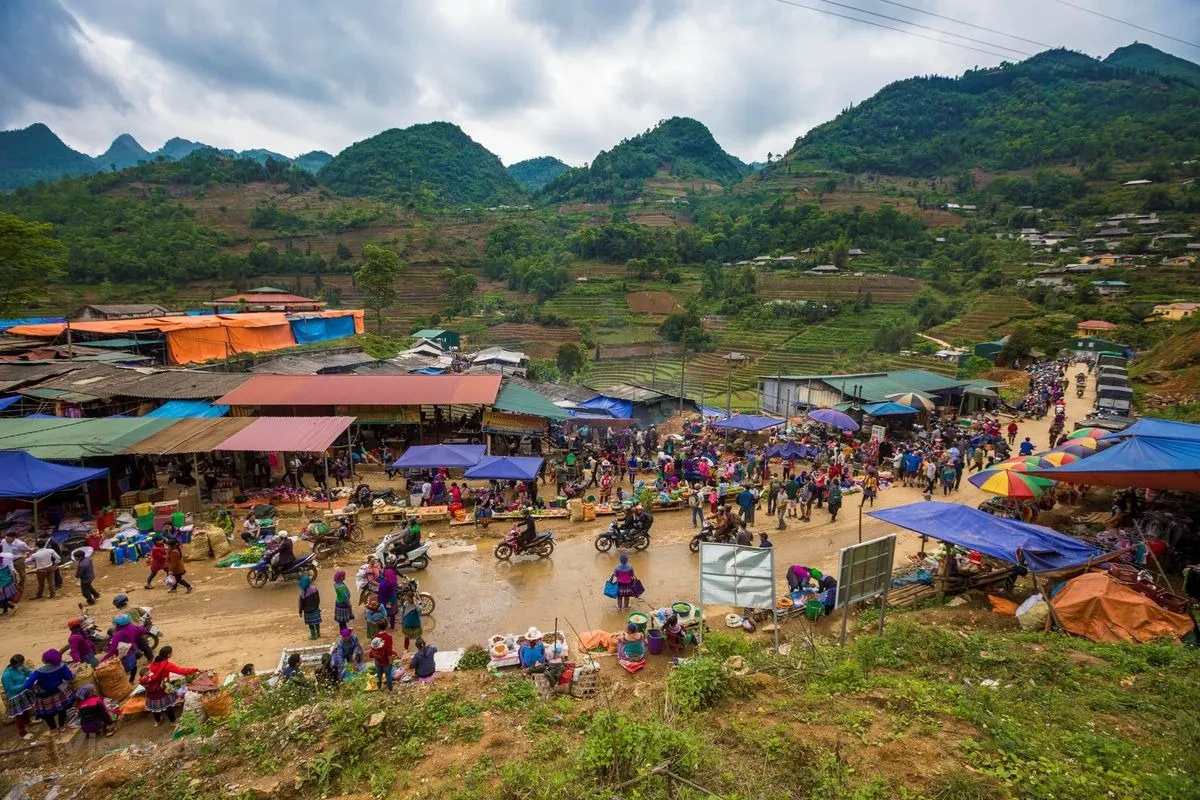
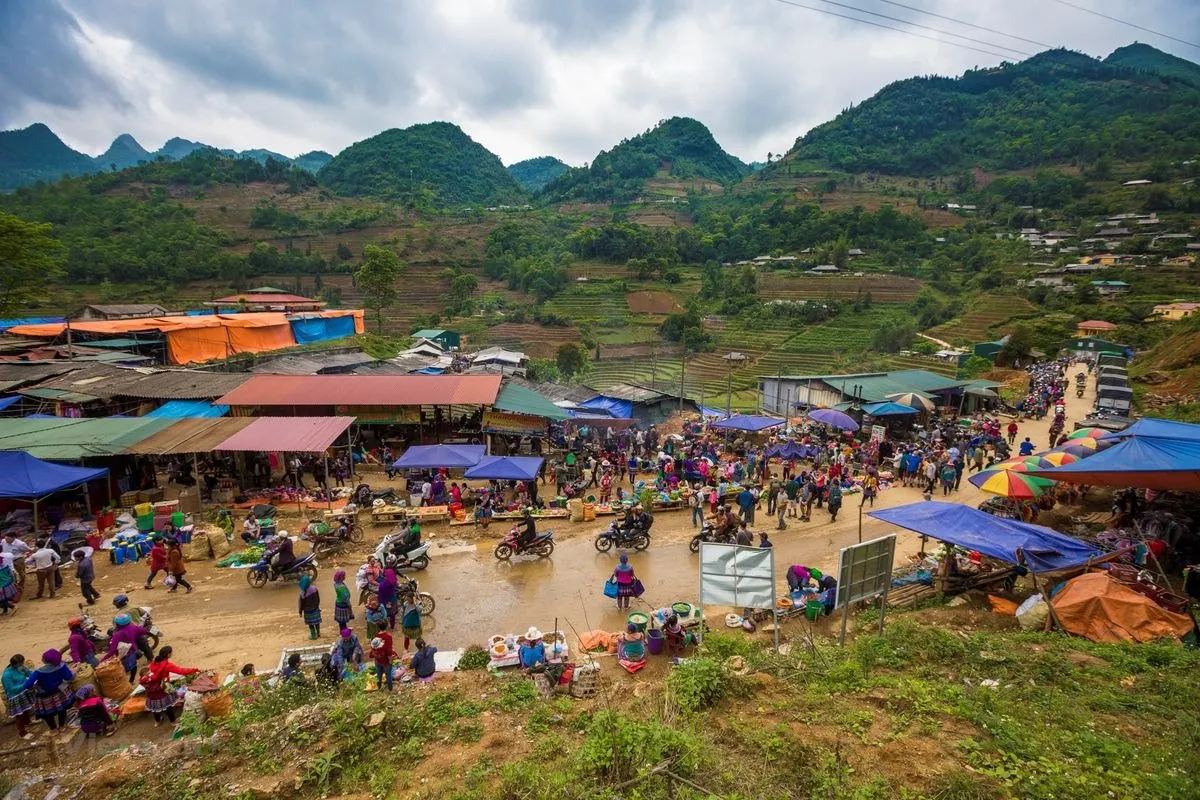
Set against the backdrop of vast mountains and valleys, Can Cau Market is held on a large mountain slope with breathtaking natural scenery. The colorful market space is lively yet poetic.
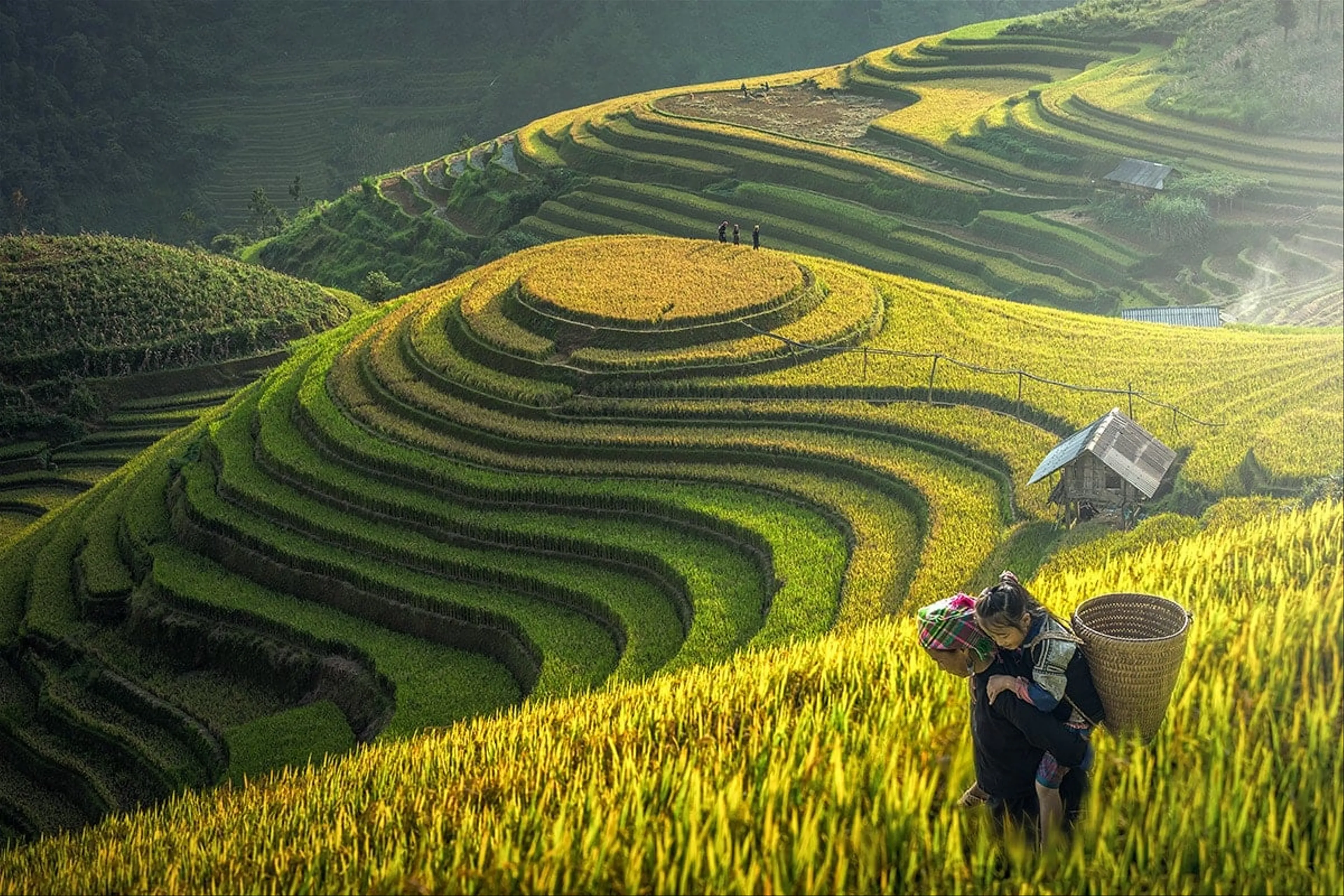
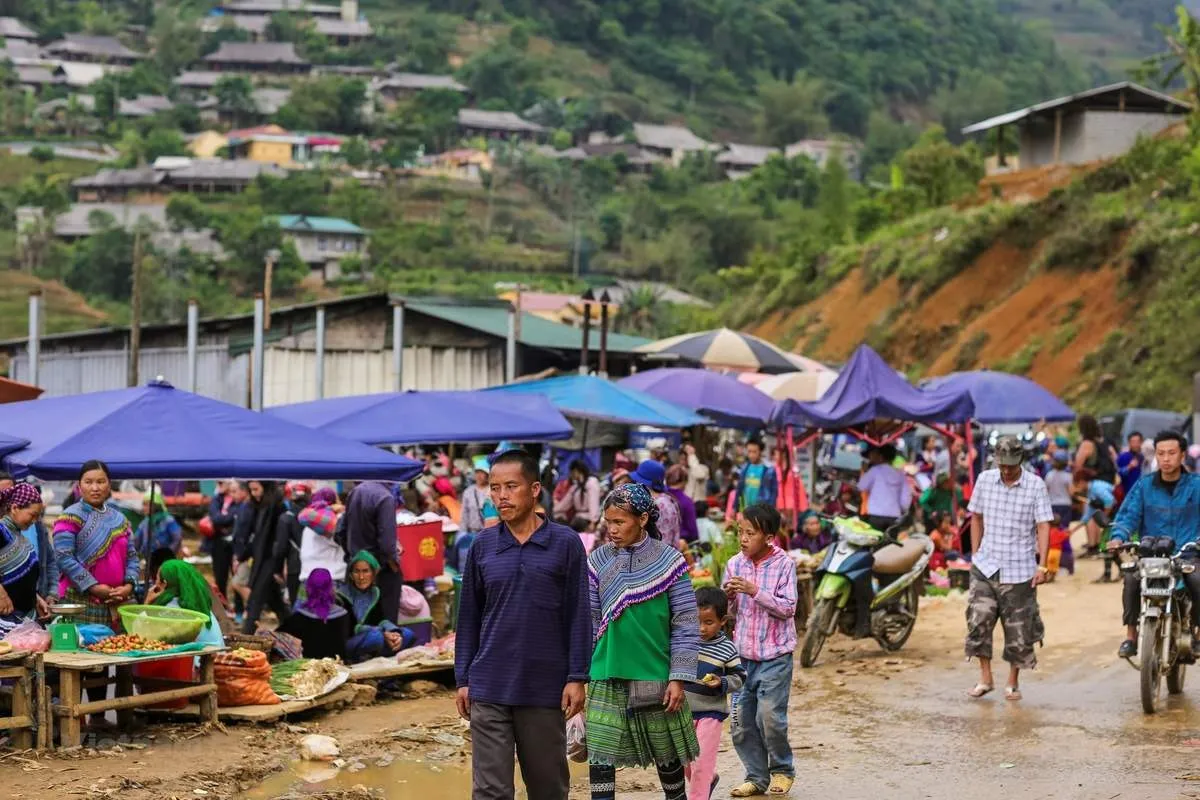
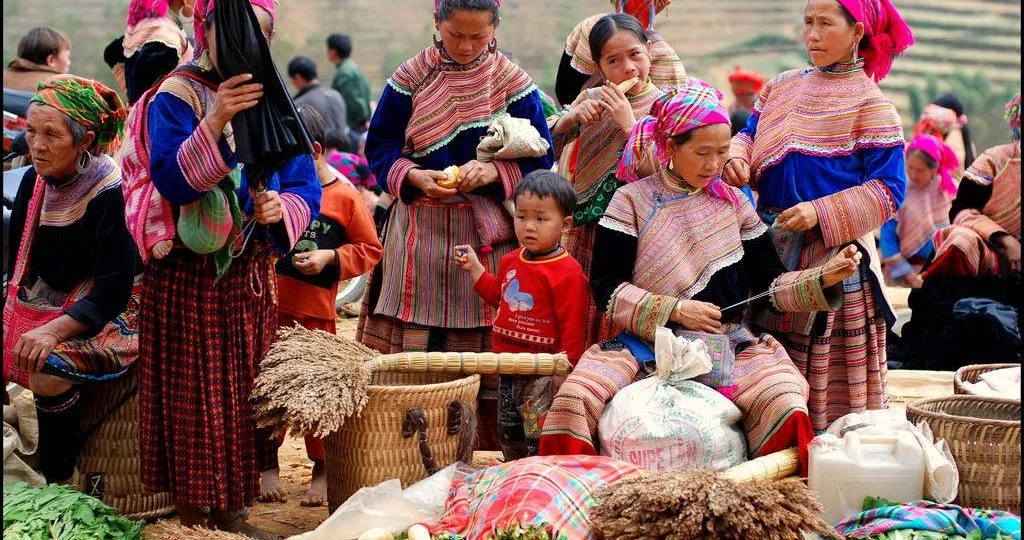
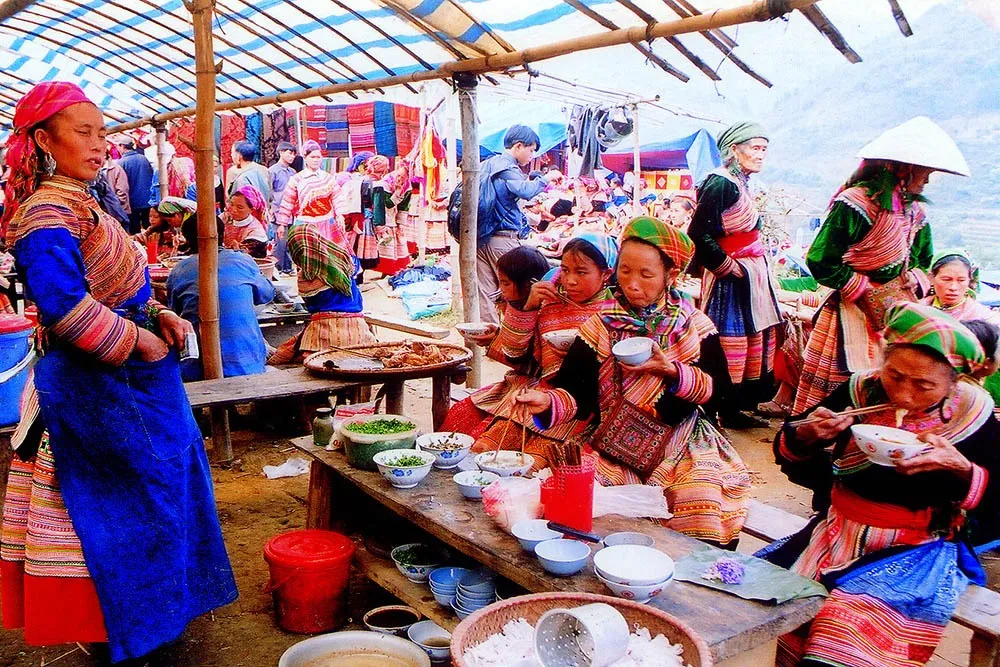
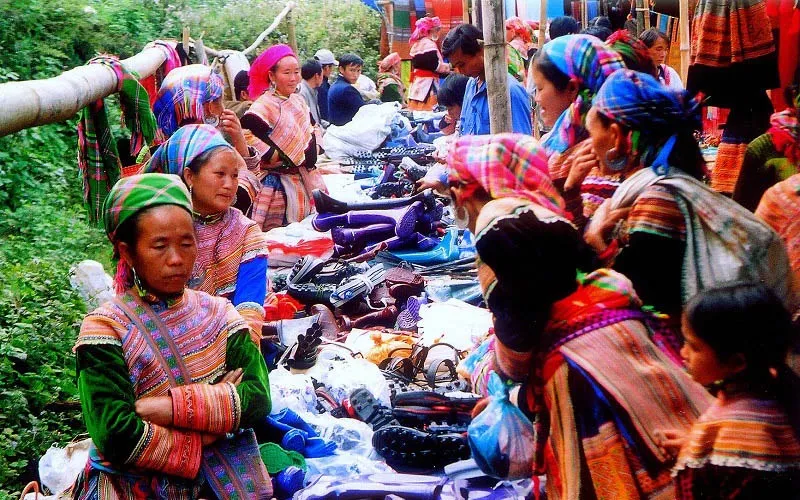
Arriving on market day, visitors are dazzled by the bright hues of traditional brocade costumes worn by Hmong, Dao, and Giay women. The vivid colors of dresses, scarves, and headpieces blend with the golden sunlight and majestic landscapes, creating a vibrant and lively scene.
From early morning, the market is already bustling. The sounds of laughter, greetings, and lively bargaining echo across the mountains, painting a simple yet distinctive picture of Northwest highland life.
No visit to Can Cau Market is complete without witnessing the famous buffalo trading zone, often dubbed the “Buffalo Capital” of the northern mountains. Every Saturday, hundreds of buffaloes are brought here for trade.
Groups of buyers and sellers gather, inspecting buffaloes, negotiating prices, and sealing deals. Fat, shiny black buffaloes, carefully raised by locals, can be sold for tens of millions of VND each.
More than just trading, the buffalo market is a meeting point for villagers to connect, exchange farming experiences, and socialize. For highland people, buffaloes are not just valuable assets but also symbols of wealth, prosperity, and good fortune.
Another highlight of Can Cau Market is its food court, rich in authentic highland flavors. From early morning, the aroma of steaming pots of thang co (a traditional Hmong dish) and sizzling charcoal grills spreads through the market, attracting passersby to stop and taste.
Thang co is made from horse or cow meat, bones, and organs, seasoned with special forest spices like cardamom, cinnamon, and star anise, creating a bold and unique flavor.
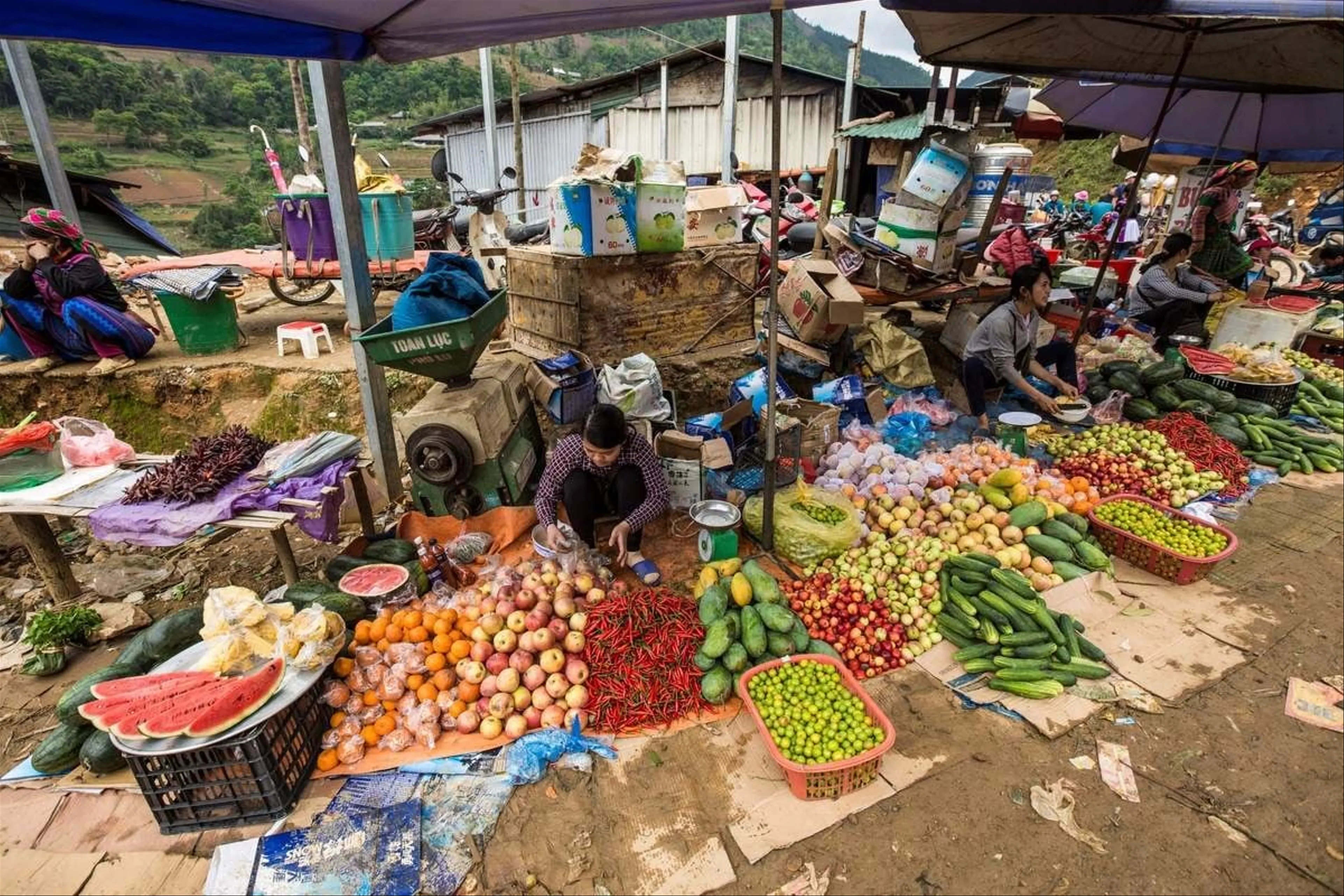
Besides thang co, visitors can enjoy other local specialties like sour pho, men men (steamed cornmeal), corn cakes, and corn wine simple yet deeply rooted in the essence of the Northwest mountains.
Strolling around the market, visitors can easily find colorful brocade stalls run by skilled Hmong and Dao women. Intricately woven dresses, scarves, and bags reflect their talent and meticulous craftsmanship.
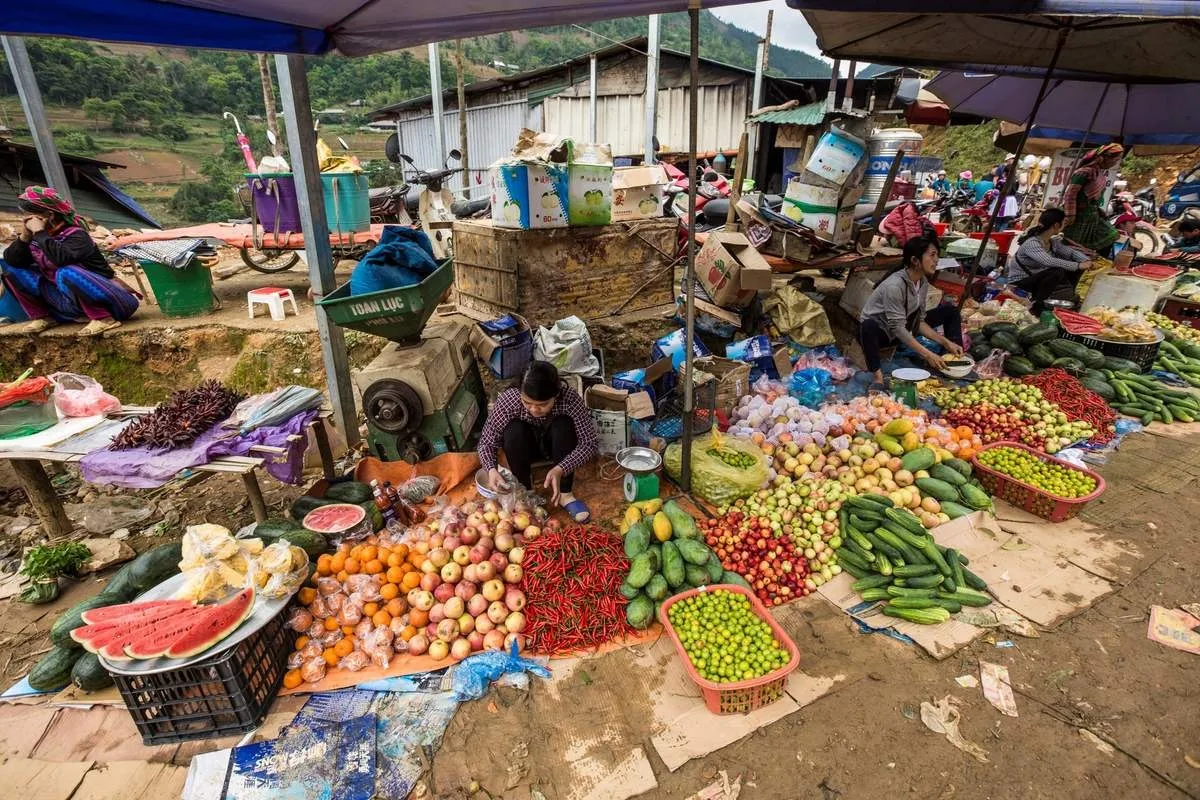
Additionally, local agricultural products such as wild honey, corn, cardamom, dried bamboo shoots, and fresh vegetables are abundantly displayed. All these items are gifts from the mountains, imbued with the soul of Lao Cai’s highlands.
Visiting Can Cau Market, travelers not only immerse themselves in the lively atmosphere but also experience the rich cultural essence of the ethnic communities.
Try buying a piece of brocade as a souvenir, savor a steaming bowl of thang co in the chilly weather, or simply sip a cup of corn wine while listening to local stories.
One of the most fascinating experiences is watching the buffalo trading scene observing how locals inspect, negotiate, and bargain. These daily life moments will surely leave a lasting impression on any visitor.
From Lao Cai City, follow the route towards Bac Ha - Si Ma Cai, then continue along Provincial Road 153 for about 18 kilometers to reach Can Cau. The road is scenic though winding, with majestic and poetic landscapes along the way. Visitors can rent a motorbike or a private car from Lao Cai or Bac Ha for flexible travel.
The market takes place every Saturday morning, starting around 6 AM and winding down by noon. To fully experience the vibrant market, it’s best to arrive early.
The most beautiful times to visit are during spring (January to March) and autumn (September to November), when the weather is cool and the natural scenery is at its most stunning.
Many visitors choose to combine their trip to Can Cau Market with other nearby attractions such as:
Can Cau Market is not merely a trading place but also a cultural space preserving the traditional values of highland ethnic minorities.
The market vividly reflects the ancient trade customs and offers great potential for community-based tourism and cultural exploration in Si Ma Cai.
With its majestic landscapes and rich cultural heritage, Can Cau Market is undoubtedly a must-visit destination for anyone exploring Lao Cai.
Can Cau Market a unique highland fair where the rich culture, cuisine, and traditions of the Northwest converge. Once you visit Can Cau Market, you’ll be mesmerized by the colorful sights, tasty local flavors, and the unforgettable cultural atmosphere found only in the highlands.
If you ever get the chance to visit Lao Cai, don’t miss Can Cau Market to truly feel the heartbeat and soul of the highland people.
Some tourist attractions in Sapa that visitors can refer to
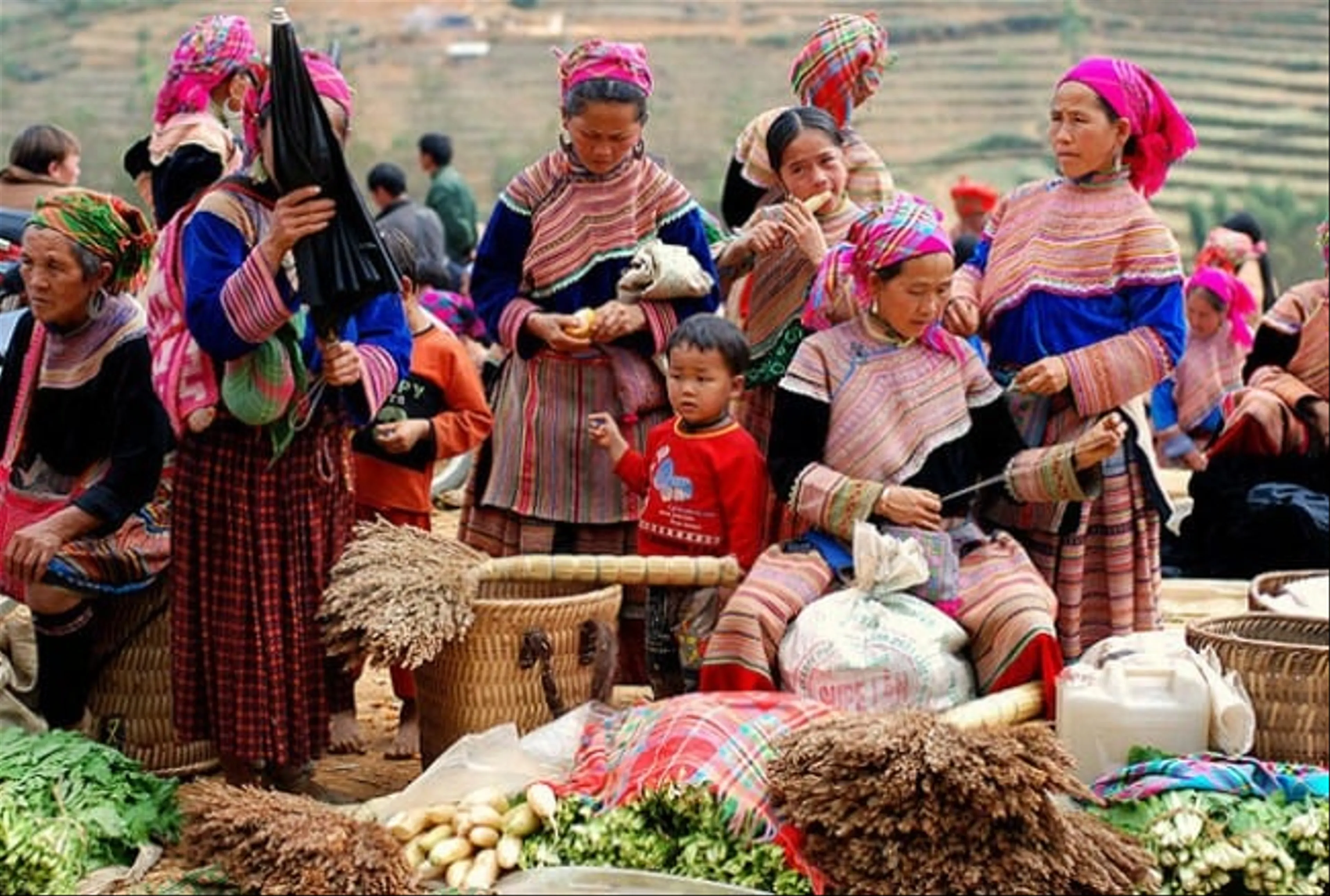
Chợ Si Ma Cai là một trong những phiên chợ vùng cao nổi tiếng và độc đáo bậc nhất của huyện Si Ma Cai, tỉnh Lào Cai. Nằm cách thành phố Lào Cai khoảng 95km về phía Đông Bắc, chợ họp vào mỗi sáng Chủ nhật hàng tuần, trở thành điểm hẹn văn hóa đầy sắc màu của đồng bào các dân tộc thiểu số như H’Mông, Nùng, Thu Lao, Phù Lá...
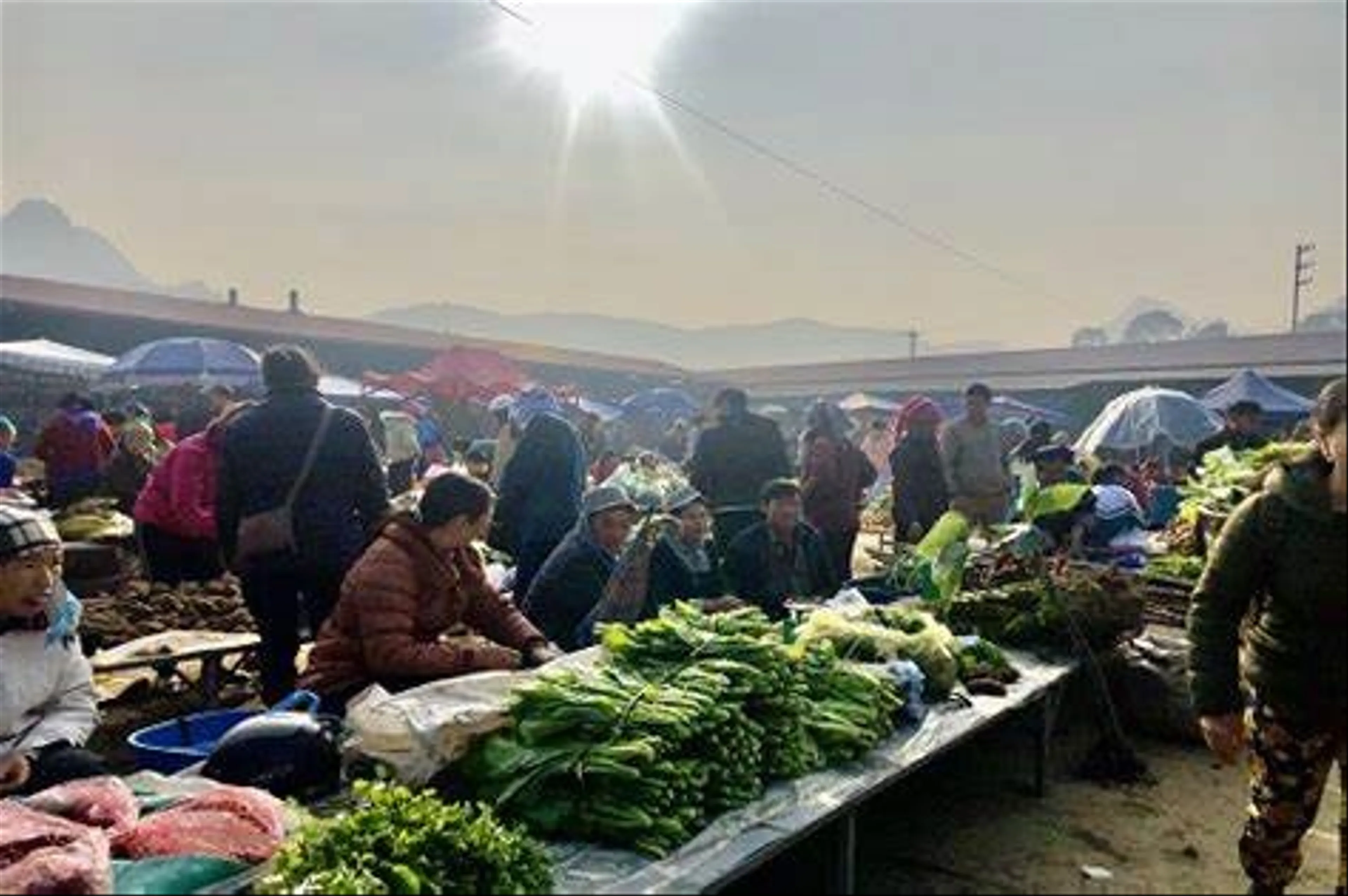
Chợ Mường Khương là một trong những phiên chợ nổi tiếng và lâu đời nhất của vùng biên giới Lào Cai. Nằm ngay trung tâm thị trấn Mường Khương, cách thành phố Lào Cai khoảng 50km về phía Đông Bắc, chợ không chỉ là nơi buôn bán, trao đổi hàng hóa mà còn là không gian văn hóa đậm bản sắc của đồng bào các dân tộc thiểu số.